Is Your Roof Ready for Solar? Best Roof Types in the Philippines
When planning a rooftop solar installation in Bicol, most homeowners spend weeks researching solar panel brands, inverter efficiency, and battery capacities. However, they often forget the most critical foundation of the entire system: the roof.
Solar panels are a 25-year investment. Your roof must be structurally sound and compatible with modern solar mounting systems to ensure safety during heavy typhoons and maximize energy production.
Let's look at how different roofing materials and styles in the Philippines perform when transitioning to solar power.
1. Corrugated Galvanized Iron (GI) Sheets (Pana-pan)
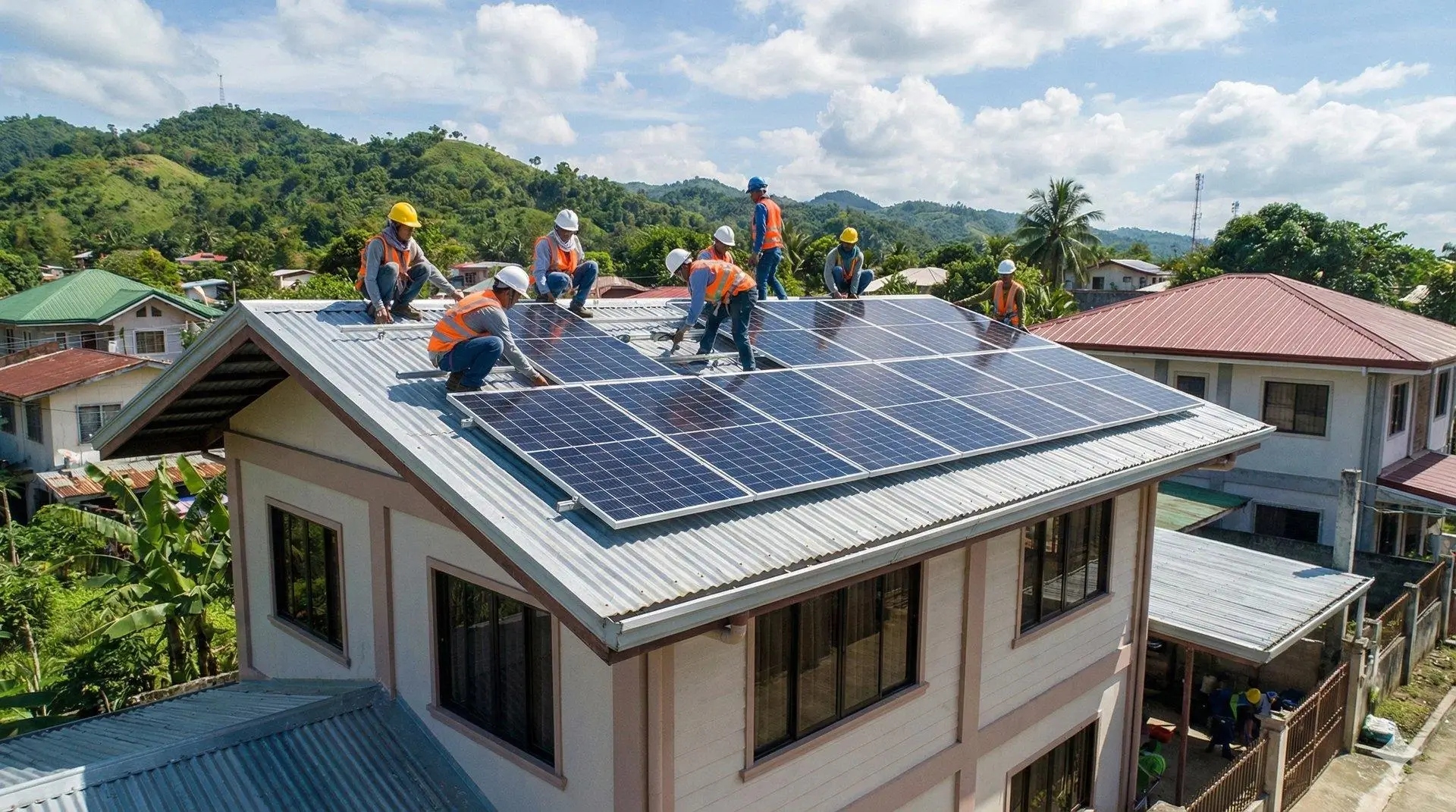
Corrugated GI sheets are the most common roofing material used on residential properties across Bicol.
- Suitability: Excellent
- Installation Method: Installers use specialized L-feet brackets that anchor directly into the steel or wooden purlins beneath the roof sheet. The bracket is sealed using heavy-duty EPDM rubber washers and industrial-grade outdoor sealant to ensure it remains 100% waterproof.
- Pro-Tip: If your corrugated sheets are already showing heavy rust or are more than 15 years old, it is highly recommended to replace the roofing sheets before installing solar panels. Removing an active solar array later just to fix a leaky roof adds unnecessary labor costs.
2. Rib-Type / Standing Seam Roofing
Rib-type profiles are widely popular in modern Philippine architecture and commercial warehouses due to their clean lines and superior water drainage.
- Suitability: Best Choice
- Installation Method: For premium Standing Seam roofs, solar installers use non-penetrating clamps. These clamps latch securely onto the raised metal ribs of the roof without drilling a single hole through the metal sheet.
- Advantage: Zero roof penetrations mean there is absolutely zero risk of water leaks over the lifespan of your solar system. If you are currently building a new home in Bicol, choosing a rib-type or standing seam roof profile is the smartest choice for future solar integration.
3. Concrete Flat Roofs (Decking)
Many modern minimalist homes and commercial buildings feature flat concrete structural decks.
- Suitability: Very Good (Requires Ballasted or Tilted Racking)
- Installation Method: Because concrete decks are completely flat, panels cannot be laid flat against the surface (otherwise, dirt washes down and pools on the glass, blocking sunlight). Installers use concrete ballast blocks or mechanical anchor bolts to mount triangular aluminum tilt frames.
- Advantage: Tilted frames allow engineering teams to angle the solar modules perfectly facing South at an optimal 10 to 15-degree tilt, maximizing daily kilowatt-hour generation.
4. Clay or Ceramic Roof Tiles
Often found on Spanish-style villas, Mediterranean homes, or premium subdivisions.
- Suitability: Difficult / High Labor
- Installation Method: Clay tiles are fragile and crack easily under foot traffic. Installers must carefully remove specific tiles, secure specialized stainless steel tile hooks directly into the structural rafters, and then lay the tiles back down.
- Cons: The installation process takes longer and requires highly skilled technicians to prevent tile breakage and future water leaks.
Structural Integrity: Can Your Trusses Take the Weight?
A standard Tier 1 solar panel weighs approximately 20 to 25 kilograms, plus an additional 2 to 3 kilograms per panel for the aluminum racking and mounting rails.
While that might sound heavy, a standard solar array spreads this load evenly across a wide surface area. This adds only about 12 to 15 kg per square meter of dead load to your roof structure.
Most standard residential roof structures in the Philippines—using C-purlins spaced at 0.6m to 1.0m intervals—can easily handle this structural weight without requiring reinforcing adjustments. However, your installer should always conduct a physical or drone-assisted structural evaluation to verify the integrity of your purlins and trusses before deployment.
Roof Orientation & Shade Assessment
To get the highest return on investment in the Bicol region, your roof space should ideally have:
- South-Facing Orientation: This catches the maximum amount of sunlight throughout the entire calendar year in the Northern Hemisphere. North-facing roofs generate about 10-15% less power but are still viable if South space is limited.
- Zero Shading: Ensure your intended roof area is free from shadows cast by nearby coconut trees, electrical poles, firewalls, or neighboring buildings between 9:00 AM and 3:00 PM.